
ALS cardiac ambulance at your OHC: equipment checklist for workplace safety in India
What an Advanced Life Support (ALS) cardiac ambulance usually carries, how it differs from Basic Life Support (BLS), and how to station one at an onsite clinic.
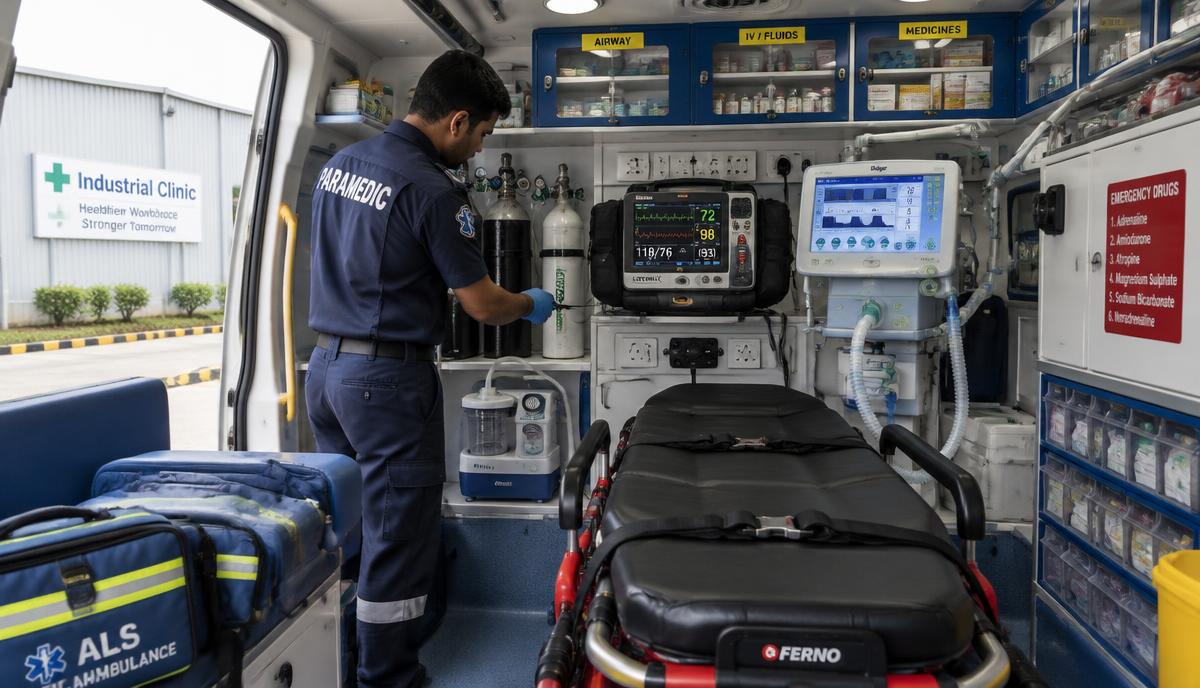
A standby ambulance at a factory, mine, construction project or large campus shortens the time between an emergency and transfer to hospital. For higher-risk sites, employers often consider an Advanced Life Support (ALS) cardiac ambulance rather than a Basic Life Support (BLS) vehicle. Knowing what each carries helps you write a clear requirement.
ALS vs BLS
A BLS (Basic Life Support) ambulance supports oxygen, basic airway care, splinting and safe transport. An ALS (Advanced Life Support) ambulance adds cardiac monitoring, defibrillation, advanced airway and medicines, and is staffed by trained personnel able to use them under medical protocols.
Typical ALS cardiac ambulance equipment
- Defibrillator with cardiac monitor (ECG, SpO2, NIBP); AED capability.
- Transport ventilator and advanced airway kit (laryngoscope, endotracheal tubes, bag-valve-mask).
- Oxygen supply: main cylinder plus portable cylinders with flowmeters.
- Electric and manual suction units.
- Syringe or infusion pump, IV fluids and cannulation supplies.
- Emergency drug kit as per the medical director’s protocol.
- Stretcher, scoop stretcher, spine board, cervical collars and splints.
- Trauma and burns dressings, PPE and infection-control supplies.
- Communication: phone or radio to the OHC, site control room and receiving hospital.
Exact contents should follow applicable standards and the ambulance provider’s medical protocols; confirm them in writing.
Making the ambulance work with the OHC
Agree where the vehicle is parked, which shifts it covers, who can dispatch it, and the preferred and alternate routes to nearby hospitals. Run daily equipment checks with a signed log, keep oxygen and drugs within expiry, and include the ambulance team in mock drills.
Get a standby ambulance proposal
See standby ambulance guidance, occupational health centre services and request a proposal with your site location and shift pattern. Availability is confirmed per location.
General planning information, not a statutory equipment list.
Share this article
Pick a tagline
The highlighted image above appears automatically as the preview picture on WhatsApp, LinkedIn and Facebook.
Related services
Want this for your workforce?
Start free with 25 employee health risk assessments and a corporate dashboard.
Get started for corporatesPlan this for your workplace
Discuss occupational health centre services for your employee roles, locations and shift coverage.