Pre-employment medical tests by job role: office, driver, height work, food handling
Which pre-employment medical tests suit office staff, drivers, workers at height and food handlers, and how to keep the process fair, relevant and confidential.
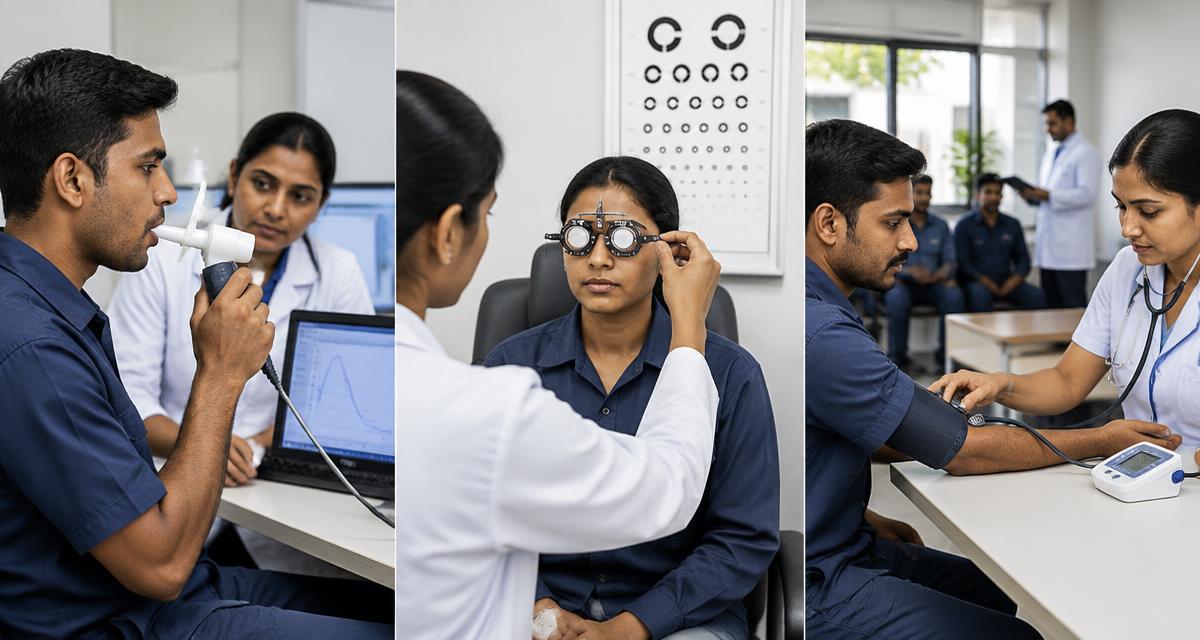
A pre-employment medical examination should answer one question: can this person do this job safely, with or without reasonable adjustments? Too often companies use one long test list for everyone. That wastes money, delays joining and can feel intrusive. Matching tests to job roles is fairer and more useful.
Principles before the test list
- Test for the demands of the role, not for general curiosity.
- Share only a fitness outcome (fit, fit with restrictions, temporarily unfit) with HR; keep clinical details with the doctor.
- Take written consent and explain what each test is for.
- Check the applicable state rules and industry regulations, which may require specific examinations for some roles.
The lists below are typical starting points. Your examining doctor should adjust them for the actual tasks and exposures.
Office and desk roles
Typical tests
- General physical examination, height, weight, BMI and blood pressure
- Vision check (distance and near), important for long screen use
- Basic blood tests such as blood sugar and haemoglobin where your policy includes them
What to avoid
Office roles rarely justify extensive investigations. Keep it short and use the result to start a wellness baseline, not to screen people out.
Drivers and vehicle operators
Typical tests
- Vision: distance, near, colour vision and field of vision
- Hearing check
- Blood pressure and blood sugar
- Assessment for conditions that can cause sudden loss of control, such as uncontrolled seizures or severe sleep problems
Why it matters
A driver's fitness affects other people on the road and on site. Licensing rules also set medical standards for some categories of driving licence, so align your checks with them.
Work at height
Typical tests
- Blood pressure, pulse and general cardiovascular examination
- Vision and depth perception
- Balance and coordination assessment
- Questions about dizziness, fainting, fits and fear of heights
- Blood sugar, as low sugar episodes can cause sudden collapse
Restrictions, not rejections
Many findings can be managed with restrictions, such as no solo height work until blood pressure is controlled. Record the restriction clearly and review it.
Food handlers
Typical tests
- Physical examination including skin, to check for infected wounds or rashes on hands and arms
- History of recent diarrhoea, vomiting, fever or jaundice
- Stool and other tests where your food safety system or local authority requires them
- Vaccination review, for example typhoid, where your policy includes it
Ongoing checks
Food handling fitness changes with illness. Combine the joining examination with a simple daily or return-to-work health declaration.
Manual handling and machine operators
Add a musculoskeletal examination, a back and joint history and, where noise or dust exposure is expected, baseline hearing and lung function tests. A baseline at joining is what lets you prove later whether a change happened at work.
Making the process smooth
- Give candidates a short checklist: fasting needs, spectacles, ID and past reports.
- Agree a turnaround time for the fitness certificate.
- Use one digital form so results reach HR in the same format for every centre.
Handling borderline results fairly
Some candidates will have results that are neither clearly fit nor clearly unfit, such as raised blood pressure on the day, a borderline vision score or a controlled long-term condition. Give the examining doctor room to repeat a test, ask for a specialist opinion or issue a time-limited restriction rather than a rejection. Decisions should always be about the specific tasks of the job and should consider whether reasonable adjustments would make the work safe. Record the reasoning, so that the decision can be explained if the candidate asks.
Keeping role profiles up to date
Write a short medical profile for each job family listing tasks, exposures and the tests attached to them. Review the profiles when processes change, so tests keep pace with the work and candidates are not asked for checks that no longer apply.
Common mistakes to avoid
- Using one long test list for every role, which delays joining and adds little safety value.
- Sharing detailed medical results with recruiters or line managers instead of a fitness outcome.
- Rejecting candidates for findings that a restriction or adjustment would manage safely.
- Skipping baseline hearing and lung tests for exposed roles, which makes later comparisons impossible.
- Forgetting to repeat checks when an employee moves into a role with new demands, such as driving or height work.
- Accepting reports from different centres in different formats, which makes review slow and error-prone.
Next steps
List your main job families, write a one-line description of the physical and safety demands of each, and ask your examining doctor to propose a test set for each. Share the sets with recruiters so candidates get clear instructions from the start, and review turnaround times after the first month. Track how many candidates are delayed by the medical step, and fix the cause rather than cutting tests that matter for safety.
Plan My Health runs pre-employment medicals across India through partner centres and onsite camps. See packages and turnaround on our pre-employment medical checkup page.
FAQs
Should every new joiner have the same pre-employment tests?
No. Tests should match the physical and safety demands of the role. A driver and an accountant need different checks.
Can HR see the candidate's test results?
HR should normally receive only the fitness outcome and any work restrictions. Clinical details stay with the examining doctor.
Are pre-employment medicals required by law?
For some roles and industries, yes. Check the applicable state rules and any sector regulations for your workplace.
Share this article
Pick a tagline
The highlighted image above appears automatically as the preview picture on WhatsApp, LinkedIn and Facebook.
Related services
Want this for your workforce?
Start free with 25 employee health risk assessments and a corporate dashboard.
Get started for corporatesPlan this for your workplace
Discuss pre-employment medical checkup for your employee roles, locations and shift coverage.