Women's Health at Work in India: Six Sessions Every Office Should Run
Six women's health sessions for employees in Indian offices: anaemia, PCOS, screening, pregnancy, menopause and nutrition, run privately.
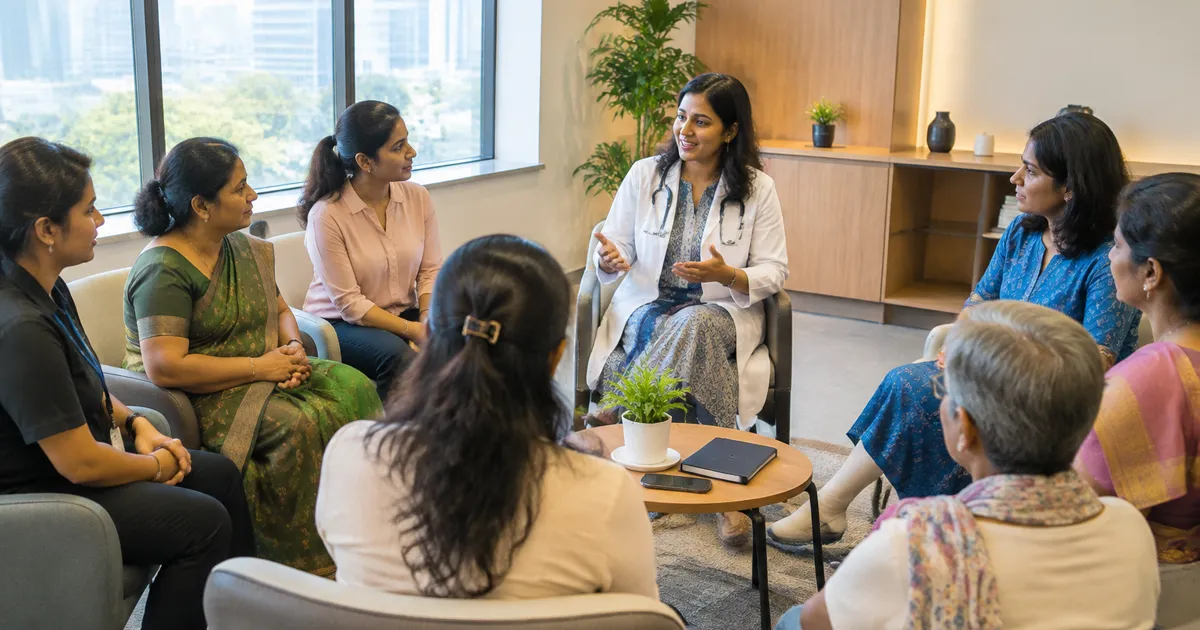
Most office wellness calendars include a women's day talk in March and little else. That leaves out the health questions women employees deal with all year: tiredness that turns out to be anaemia, irregular periods, worry about screening, returning to work after a baby, or symptoms in their forties that nobody at work talks about.
Well-planned women's health sessions for employees give people accurate information, a safe place to ask questions and a clear next step. This guide sets out six sessions an Indian office can run across a year, and how to run them so that women actually attend.
Why a single annual talk is not enough
Women's health needs change across life stages. A 24-year-old analyst, a 33-year-old manager planning a pregnancy and a 48-year-old team lead have very different questions. One general talk cannot cover all of them in enough depth to be useful.
A series of shorter sessions, each on one topic, works better. People choose the sessions that matter to them, and each speaker has time for real questions. The series can sit inside your wider corporate wellness sessions calendar rather than as a separate project.
The six sessions
1. Anaemia and everyday energy
Anaemia is common among Indian women and is often missed because its signs — tiredness, breathlessness on stairs, poor concentration — are easy to blame on work. A doctor-led session explains what anaemia is, why iron and other deficiencies happen, which symptoms deserve a blood test, and how diet and treatment help.
This is a good first session because it is practical and not embarrassing to attend. It also links naturally to an annual checkup that includes a haemoglobin test.
2. PCOS: periods, weight and long-term health
Polycystic ovary syndrome (PCOS) affects periods, skin, weight and sometimes fertility, and is linked to later metabolic health. Many women live with symptoms for years without a diagnosis. A gynaecologist or physician can explain the signs, why diagnosis needs a doctor, how lifestyle changes help, and when to seek care.
Keep this session small and private. Some participants will want to ask about their own symptoms; offer a confidential follow-up slot or teleconsultation rather than discussing individual cases in the room.
3. Breast and cervical screening awareness
This session explains what breast self-awareness means, which changes should prompt a doctor visit, what cervical screening involves and the role of HPV vaccination. The aim is to reduce fear and confusion, not to perform any test during the talk.
Avoid quoting age cut-offs or test intervals as universal rules. Guidance differs by risk and changes over time, so the speaker should tell participants to confirm the right schedule with their own doctor.
4. Pregnancy and returning to work
Expectant employees and new parents have practical questions: managing nausea and fatigue at work, safe commuting, breaks for antenatal appointments, and expressing milk after return. Managers often have questions too, but should not attend the same session.
Run one session for expectant and new mothers, and a separate briefing for managers on how to support a return to work. Include HR policy information — leave, flexible hours, the availability of a private room — so the session is useful beyond health advice.
5. Menopause at work
Perimenopause and menopause can bring hot flushes, poor sleep, low mood, joint pain and difficulty concentrating, often while women hold senior roles. Many feel unable to mention symptoms at work. A session led by a doctor explains the stages, the symptoms, treatment options to discuss with a doctor, and simple workplace adjustments such as temperature control and flexible breaks.
This session works well when open to all genders as an awareness talk, with a separate, women-only Q&A afterwards.
6. Nutrition for women at every stage
A dietitian-led session can tie the series together: iron, calcium, vitamin D and protein needs, eating well with long commutes and desk lunches, and vegetarian food choices. It pairs well with our general nutrition sessions for employees, with women-specific examples added.
Running sessions privately and inclusively
Attendance depends on trust. Women will not come to a session on periods or menopause if they fear colleagues or managers will draw conclusions about them. A few practical rules make a large difference.
- Doctor-led, not motivational. Use qualified doctors or dietitians who can answer medical questions accurately.
- Small rooms and online options. A meeting room for 15–25 people feels safer than an auditorium. Offer an online version with cameras optional.
- Anonymous questions. Collect questions in advance through a form, or use a question box or chat during the session.
- No attendance reports by name for sensitive topics. Share only total numbers with HR.
- Inclusive language. Speak about bodies and life stages without assumptions about marriage, children or orientation.
- Timing that suits real schedules. Lunchtime or early afternoon, repeated for different shifts and office days.
- A clear next step. End each session with how to book a private consultation or checkup.
Health information is sensitive personal data. In India, the Digital Personal Data Protection Act, 2023 and its Rules bring in obligations in phases, so confirm with legal advice which requirements already apply to your programme.
A simple twelve-month plan
| Quarter | Session | Format |
|---|---|---|
| --- | --- | --- |
| Q1 | Anaemia and everyday energy | Onsite talk, online repeat |
| Q1 | Nutrition for women at every stage | Onsite with dietitian |
| Q2 | PCOS: periods, weight and long-term health | Small group, private Q&A |
| Q3 | Breast and cervical screening awareness | Onsite talk, online repeat |
| Q3 | Pregnancy and returning to work | Two sessions: employees, managers |
| Q4 | Menopause at work | Awareness talk plus women-only Q&A |
Adjust the order to your workforce. A young office may start with anaemia and PCOS; a more senior workforce may start with menopause.
Use your data to choose topics
An employee health risk assessment can show, in anonymised form, which topics matter most: how many women report fatigue, irregular periods or sleep problems, or have never had a screening conversation with a doctor. Use these grouped results to order the sessions — never to identify individuals.
After each session, ask a short, anonymous feedback question: was it useful, and would you book a follow-up? That tells you more than attendance alone.
Checklist for HR before the first session
- Agree the six topics and the order with a doctor.
- Confirm the speakers' qualifications.
- Book small rooms and online links; repeat for shifts.
- Set up an anonymous question form.
- Prepare a one-page note on leave, flexible work and private-room policies.
- Arrange a confidential follow-up route: teleconsultation, checkup or referral.
- Decide what attendance data HR will and will not see.
Next steps
See what our doctor-led women's health sessions for employees cover, browse the full corporate wellness sessions catalogue, or start with a confidential health risk assessment to see which topics your team needs first.
Medical disclaimer: general educational information only, not medical, legal or diagnostic advice. Individual decisions about tests, treatment or fitness for work belong with a qualified doctor. Medical review of this article is pending.
FAQs
Should men attend women's health sessions?
Awareness talks such as menopause at work can be open to everyone, which helps managers understand. Sessions on personal topics such as PCOS or pregnancy work best for women only, with a separate briefing for managers.
Will HR know who attended?
For sensitive topics, HR should see only total numbers, not names. Agree this before the series starts and tell employees.
Are any tests done during the sessions?
No. Sessions are for information and questions. Tests are arranged separately, privately and on a doctor’s advice.
Can sessions be run online?
Yes. Online sessions with cameras optional and anonymous questions often get good participation for sensitive topics.
Who should lead the sessions?
A qualified doctor, gynaecologist or dietitian, depending on the topic, so medical questions are answered accurately.
How often should we run them?
Spreading six sessions across a year keeps each one focused and gives people time to act on what they learn.
Share this article
Pick a tagline
The highlighted image above appears automatically as the preview picture on WhatsApp, LinkedIn and Facebook.
Related services
Want this for your workforce?
Start free with 25 employee health risk assessments and a corporate dashboard.
Get started for corporatesPlan this for your workplace
Discuss women's health sessions for employees for your employee roles, locations and shift coverage.